Over the past several years, I’ve noticed framing trends shifting. Floating frames, once mostly associated with contemporary work, have become common for many types of paintings. At the same time, traditional gold frames—once considered somewhat old-fashioned—are beginning to reappear.
Watching these changes raises an interesting question for a landscape painter: should the frame follow design trends, or should it primarily serve the painting itself?
Framing is more than a finishing detail; it shapes how a painting is experienced in a room. A frame creates the boundary between the artwork and the room. It marks the transition from the wall into the space of the painting.
This transition is especially important in landscape painting, where representational art often relies on the illusion of depth—the sense that the viewer is looking through the canvas and into another world. The frame can reinforce that experience by guiding the viewer’s eye inward. A good frame rarely draws attention to itself. Instead, it supports and enhances a painting.
Today, landscape paintings are commonly presented in several different ways.
Traditional or plein-air frames remain widely used for representational landscapes. These frames often feature wider mouldings, warm wood tones, or a subtle gold rabbet, an inner edge that provides a transition between the frame and the painting.
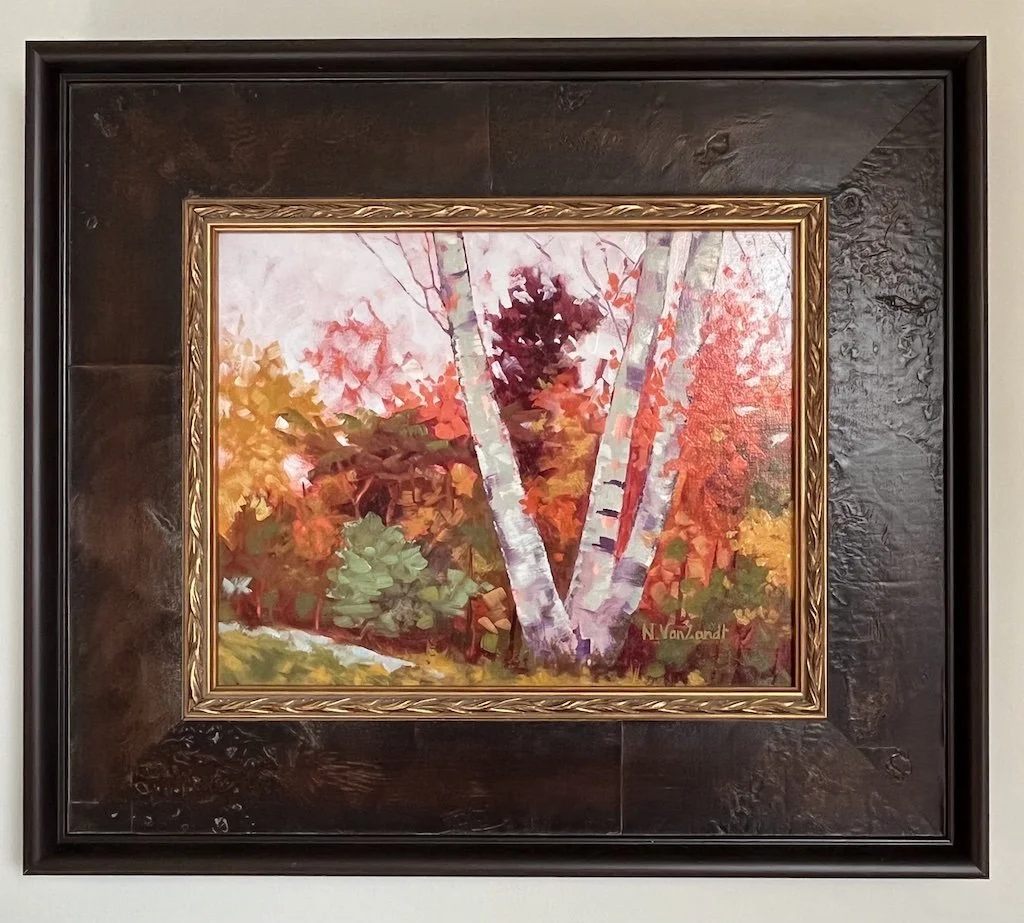
Landscape painting presented in a traditional dark wood frame with a subtle gold rabbet that gently draws the eye toward the painting.
Floating frames, popular in contemporary art, use a narrow gap, making the canvas appear to float within the frame. This approach emphasizes the painting as an object rather than a window into space.
Minimal gallery frames offer another option. Thin black or natural wood frames are designed to recede visually so that the painting integrates into modern interiors.
Each approach creates a slightly different relationship between the painting and the room.
For landscape painters, framing decisions often relate closely to how the painting creates depth. Many traditional frames include subtle elements—such as an inward bevel or a thin gold rabbet—that direct the viewer’s attention toward the image. These small details reinforce the illusion of depth and help draw the viewer into the landscape.
Because of this, many representational landscape painters continue to favor traditional wood frames or gold-toned frames.
Gold frames have long been associated with landscape painting, and there are practical reasons for this beyond tradition.
One reason is color temperature. Seascapes often contain cool tones—blues, blue-greens, and soft grey skies. A warm gold frame creates a gentle contrast with these cooler colors, allowing them to appear richer and more luminous.
Unlike dark wood frames, which absorb light, gold frames softly reflect the ambient light in a room. This quality can echo the sense of atmosphere and reflections often portrayed in paintings of water and sky.
That is why gold frames can work especially well for seascapes and other landscapes that emphasize sky and air.
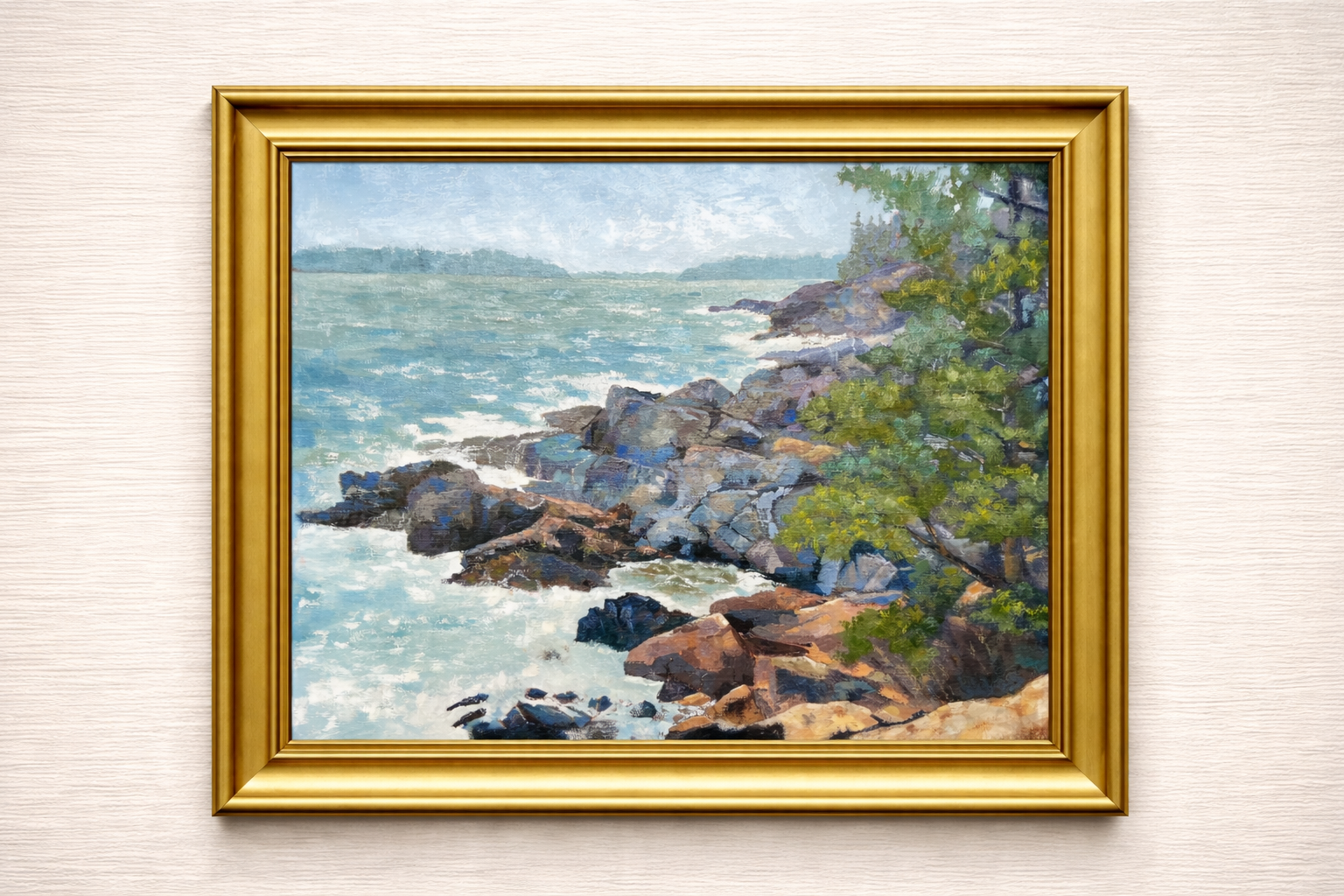
Seascape in a traditional gold frame. The warm frame contrasts with the cool blues of water and sky.
Wood frames, by contrast, tend to feel more grounded and can complement landscapes dominated by earth tones, forests, or fields.
Of course, paintings rarely exist in isolation. They live within interiors that have their own materials, colors, and architectural character. For this reason, the most successful frames often strike a balance: they respect the subject of the painting while allowing it to feel at home in the surrounding interior.
Framing trends will likely continue to evolve as interior design changes. Yet the fundamental purpose of a frame remains the same: to support the painting and create a thoughtful transition between the artwork and the room around it.
Perhaps the best frames are not those that follow trends most closely, but those that allow the painting itself to remain the focus and to settle comfortably into a space for many years.
You can view my available landscape paintings on the Available Work page.